Read before use
1, data from excel, copy and paste data into the input frame
2, data from txt, must tab-seperated, copy and paste data into the input frame
3, specieal and non-English characters such as #, <, >, %, (, ), α are not friendly
4, use point as decimal separator, not comma. e.g. 3.14, not 3,14 as pi
Required

Optional
Figure size
figure width: ; figure height:

Point color (support at most 6 groups, line color same)
Color sets
Custom

color1: ; shape 1:
color2: ; shape 2:
color3: ; shape3:
color4: ; shape4:
color5: ; shape5:
color6: ; shape6:

point size:
point transparency (0-1):
fit line (95% CI):

Font Size
axis label font size:
axis tick font size:
legend font size:

Statistical Method


Fit type


All fit line parametes
All fit line color:
All fit line width:

Legend show (no group name for only one group)


Font Family


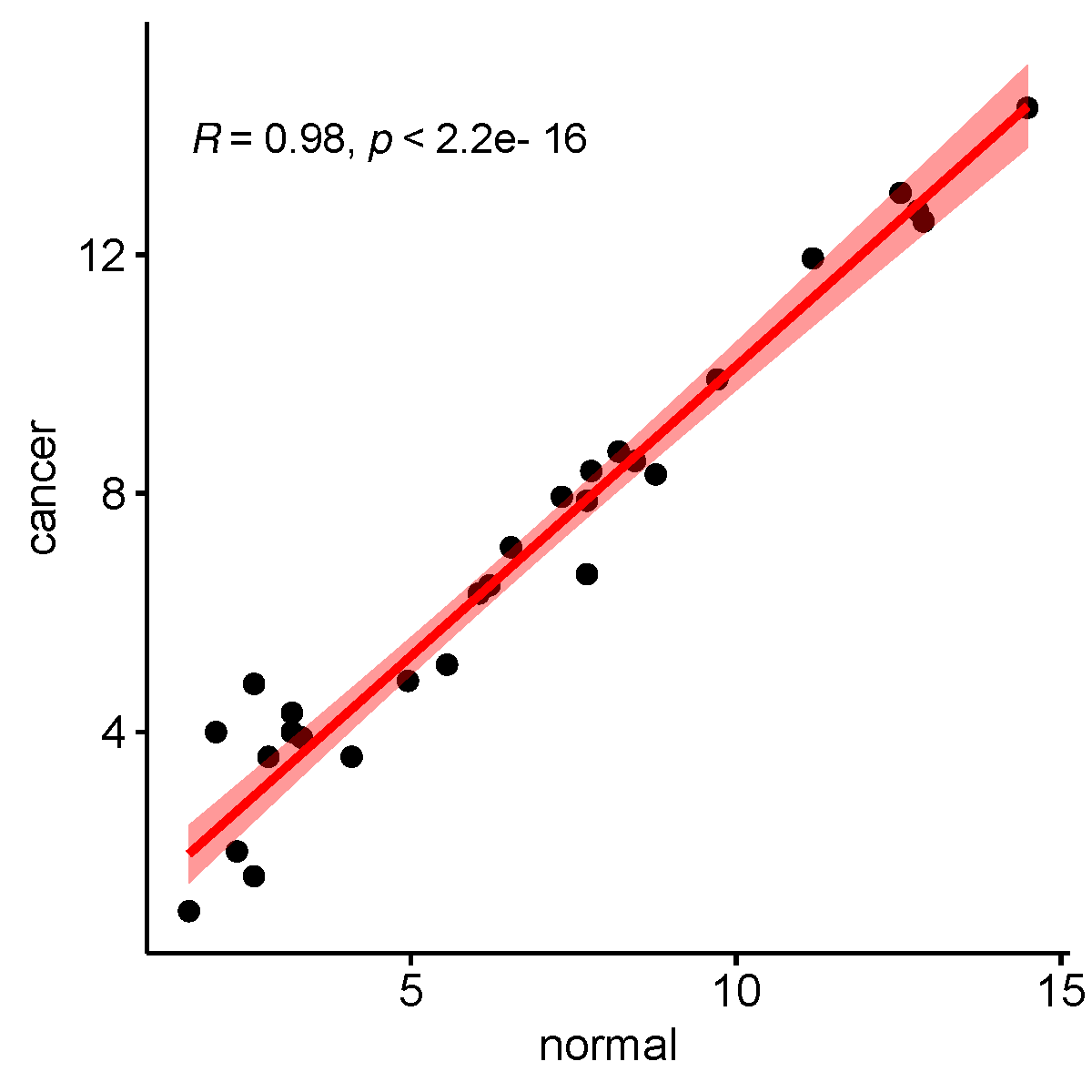
Pearson correlation coefficient scatter plot

Introduction
Pearson correlation coefficient was used to reflect the linear-related degrees of two variables. It's range is -1 to 1. 1 depicts totally positive correlated; -1 depicts totally negative correlated; 0 depicts no linear correlation.
Input data instructions
Matrix input data, names are uniqe. The first column is name, and the other columns are values. If input two datasets, scatter plot will be show, otherwize, correlation matrix will output, you can copy the input and paste to correlation plot to perform a matrix plot.
Paper example
Quantitative trait locus mapping of rust resistance and agronomic traits in spring wheat. Fig2
Input Example
Output

1) How to plot?
1, Put data in excel according to the example format.
2, Copy and paste into input frame.
3, Input pre-checking button to check input
4, After checking pass, select parameters, submit and download

2) How to cite?
9000+ papers in (Google Scholar)
Tang D, Chen M, Huang X, Zhang G, Zeng L, Zhang G, Wu S, Wang Y. SRplot: A free online platform for data visualization and graphing. PLoS One. 2023 Nov 9;18(11):e0294236. doi: 10.1371/journal.pone.0294236. PMID: 37943830.

3) FAQs